Behavioral Communication
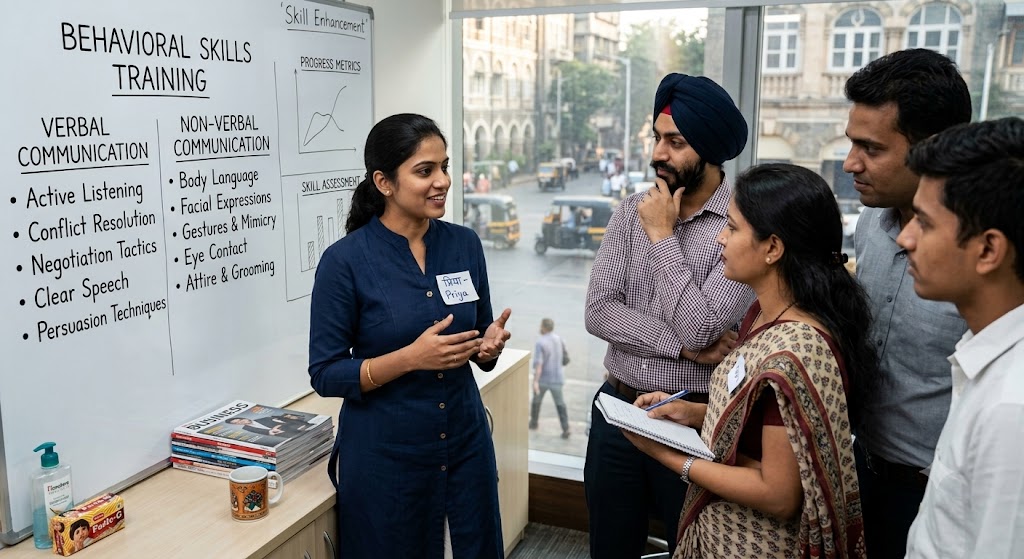
Behavioral communication focuses on understanding how thoughts, emotions, and actions affect the way we interact with others. Our programs cover:
- Emotional intelligence and self-awareness in professional settings.
- Conflict resolution and de-escalation techniques.
- Building trust and credibility through consistent behavioral patterns.
- Assertiveness training — expressing needs and boundaries effectively.
- Cross-cultural communication and sensitivity.
Verbal Communication
Verbal communication skills determine how clearly and persuasively we convey our ideas. Our training covers:
- Business presentation and public speaking skills.
- Structured storytelling and persuasive communication techniques.
- Active listening and questioning skills for better understanding.
- Negotiation and influencing skills for professionals.
- Telephone and virtual meeting communication etiquette.
Non-Verbal Communication
Studies show that a significant portion of communication happens non-verbally. Our non-verbal training includes:
- Body language awareness — posture, gestures, and eye contact.
- Facial expressions and their impact on audience perception.
- Proxemics — use of personal space in professional interactions.
- Written communication — email etiquette, tone, and clarity.
- Virtual communication — presence and engagement in video calls.
Our workshops combine theory with practical exercises, role-plays, and real-time feedback to ensure participants walk away with skills they can immediately apply in their professional lives.